
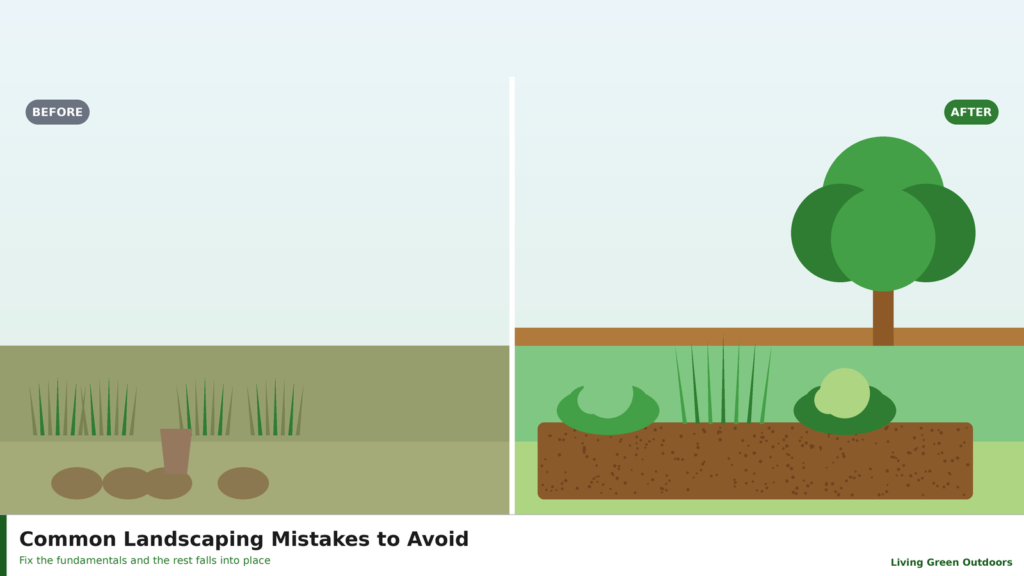
Nobody sets out to ruin their backyard. The mistakes that cause the most grief are usually quiet ones, the kind that look fine for the first season and then slowly turn into a problem you cannot ignore. By the time the lawn is boggy or the retaining wall is leaning, the cheap fix has long gone.
Here are the ones that come up again and again, and what works better.
Ignoring drainage until it rains
This is the big one. Water always wins. People design a beautiful garden, lay turf, build a deck, and never ask where the rain actually goes. Then a heavy Sydney downpour turns the lawn into a swamp and water pools against the house.
Before you plant a thing, watch your yard during a proper storm. See where it sits and where it runs. Sort the grades, the drains and the fall away from the house first. It is not glamorous and it is the single most important thing you will do.
Buying plants on a whim at the nursery
A Saturday at the garden centre is a dangerous thing. Everything looks lush under the misters, and you come home with a boot full of plants that have nothing in common. Some want shade, some want full sun, some need constant water. They cannot all be happy in the same bed.
Work out your conditions first. Sun, soil, how much water you can realistically give. Then buy. Tough natives like westringia, grevillea and lilly pilly handle Sydney’s clay and heat far better than the fussy imports that look great in a cooler climate and sulk here.
Planting too close to the house, or too close together
That cute little lilly pilly in a 200mm pot becomes a four-metre screen in a few years. People plant trees and shrubs right up against the wall or the fence, and a few seasons later the roots are in the slab and the branches are in the gutter.
Read the mature size on the tag and actually believe it. Give trees room to grow into. A bare-looking bed for the first year beats a jungle pressing on your foundations later.
Treating the lawn as the default
Lawn has its place. Kids and dogs love it. But a lot of Australian backyards are more grass than anyone needs, and grass is thirsty, hungry and high-maintenance. Every weekend you are mowing, feeding and watering a surface you barely use.
Shrinking the lawn to the bit you actually use, and turning the rest into garden bed, paving or gravel, cuts your maintenance right down. Your weekends open up and your water bill drops.
Skimping on soil prep
People spend hundreds on plants and nothing on the dirt they go into. Sydney’s heavy clay is rough on roots, and dumping a plant straight into unimproved clay is a slow death sentence. The plant limps along, never thrives, and eventually you blame the plant.
Dig in compost and gypsum, break up the clay, and give the roots somewhere to breathe. Good soil is boring to spend money on and it is the difference between a garden that thrives and one that just survives. A rough rule: spend on the soil what you were about to spend on the plants, and both will go further.
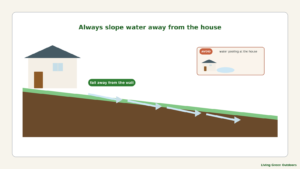
Slope the ground so water drains away from the house.
Forgetting how you will get around the garden
This one sneaks up on people. You design a gorgeous layout and then realise you cannot get the mower to the back lawn, or the bins have to be dragged through a garden bed, or there is no way to reach the back of the house to clean the gutters. Access is invisible until the day you need it and it is not there.
Walk through your plan as if you were doing the chores. Mowing, bins, deliveries, maintenance. Leave paths and gaps wide enough for the jobs that actually happen, not just for show.
Ignoring the neighbours and the council
Plant a row of fast-growing trees along the fence and you might be thrilled with the privacy and your neighbour furious about the shade and the leaves in their gutters. Some structures and bigger works also need council approval, and retaining walls over a certain height almost always do. Finding this out after the wall is built is an expensive way to learn.
A quick chat with the neighbours and a check of your council’s rules before you start saves a world of grief. It is not the exciting part of a project, but disputes and orders to remove work cost far more than a phone call would have.
Going all-in on high-maintenance features
Water features, formal hedges that need clipping every month, fussy topiary, sprawling veggie patches. They look incredible in the first photo. Then life gets busy and they become a guilt trip in the corner of the yard.
Be honest about how much time you will actually give the garden. If the answer is not much, design for that. A low-maintenance native garden that looks good with a couple of hours a month beats a showpiece you cannot keep up with. The fantasy version of yourself who weeds every weekend rarely turns up, so plan for the real one.
Underestimating the structural stuff
Retaining walls, paving, levelling a slope, drainage runs. These are not weekend jobs to be guessed at. A retaining wall that fails is dangerous and expensive, and a paved area that was not laid on a proper base will crack and sink within a couple of years. This is where DIY confidence costs people the most. If your plans involve any of it, it is genuinely worth getting landscape design and construction done properly the first time.
Not having a plan at all
The most common mistake is doing the whole yard in dribs and drabs with no overall plan. A bed here, some pavers there, a tree because it was special. Nothing connects, and you end up redoing things because the early decisions did not leave room for the later ones.
Even a rough sketch on paper helps. Map out the zones, the paths, where the sun falls, where the water goes. If you are not sure where to start, it can be worth a quick conversation with someone who does this for a living. You do not have to commit to anything to just have a chat with a landscaper about what is realistic for your block and budget.
The pattern behind all of these
Almost every one of these mistakes comes from rushing to the fun part before the boring part is sorted. Drainage, soil, sun, a plan. Get those right and the planting is the easy bit. Skip them and you will be redoing the same yard in three years, wondering where the money went.
None of this means you cannot do a garden yourself. Plenty of people build lovely backyards on their own. The ones who succeed just slow down at the start, sort the unglamorous fundamentals, and resist the urge to fill the boot at the nursery before they have a plan. Do that and you sidestep the mistakes that catch most people out.
You can also read about: Choosing The Correct Type of Office Furniture for Home Study Areas